The delivery of entire divisions to battlefields behind enemy lines by parachute and glider was a unique feature of World War II.
Failures at D-Day landings necessitated that, in order to avoid severe dispersion of paratroopers, US tactics be rethought and daylight airdrops be implemented.
The new...
The US Marine Corps formed six tank battalions in World War II which saw combat in some of the most varied and extreme conditions of the Pacific theater. The Marine tank battalions fought on small coral atolls such as Tarawa, in the fetid jungles of the south west Pacific including Guadalcanal, in...
Read More about US Marine Corps Tanks of World War II (New Vanguard #186)The Siegfried Line campaign was one of the most frustrating and bloody series of battles fought by the US Army in Northwest Europe during World War II (1939-1945).
In order to break through the German-Belgian border north of the Ardennes and eventually reach the Rhine, the First and Ninth divisions...
A concisely detailed guide to the Allied tanks that fought from D-Day to the break out from Normandy, their qualities, numbers and performance, and how they were used on the battlefield.
When Allied tanks began to roll off the landing craft on D-Day, it marked the start of one of the great periods of...
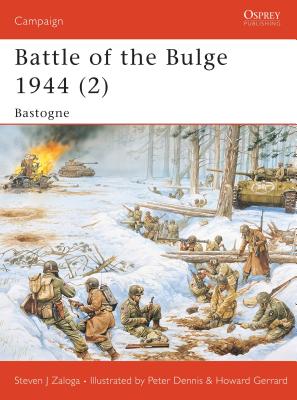
Osprey's second title examining the Battle of the Bulge, which was the largest and most costly battle fought by the US Army in World War II (1939-1945). When the attack in the north by 6th Panzer Army failed, Hitler switched the focus of the offensive to General Manteuffel's 5th Panzer Army farther...
Read More about Battle of the Bulge 1944 (2): Bastogne (Campaign #145)The T-34-85 tank is one of those rare weapons that have remained in service for more than half a century. First introduced in 1944, it has seen combat in nearly every corner of the globe. Steven Zaloga and Jim Kinnear look at this long-serving tank at length. Although long obsolete in Europe, it has...
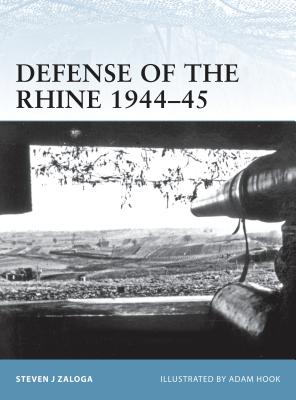
Read More about T-34-85 Medium Tank 1944–94 (New Vanguard #20)The Rhine River represented the last natural defensive barrier for the Third Reich in the fall of 1944. Although Hitler had been reluctant to allow the construction of tactical defense lines in France, the final defense of the Reich was another matter. As a result, construction of a Rhine defense...
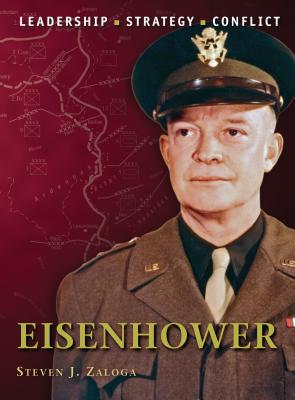
Read More about Defense of the Rhine 1944–45 (Fortress #102)Dwight Eisenhower represented a fundamentally new type of military commander in the 20th century: commander as manager rather than the traditional warrior commander. Armies had become so large and military coalitions so dependent on politics that this new type of commander emerged. Eisenhower never...
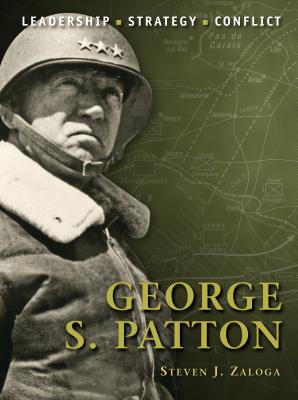
Read More about Eisenhower (Command #18)George S. Patton Jr. was the iconic American field commander of World War II, and widely regarded as the US Army's finest practitioner of mechanized warfare. This title examines Patton's colorful life and leadership in three wars, with a concentration on his command in World War II. Despite his...
Read More about George S. Patton (Command #3)Carl Gustaf Emil Mannerheim is a legendary figure, whose life and career were deeply influential in Finnish and European history. He is viewed by many as the father of modern Finland after leading the 'White' faction to victory and independence in the Finnish Civil War of 1918. That conflict...
Read More about Gustaf Mannerheim (Command #32)